4 Days in Beijing: An Itinerary That Actually Works
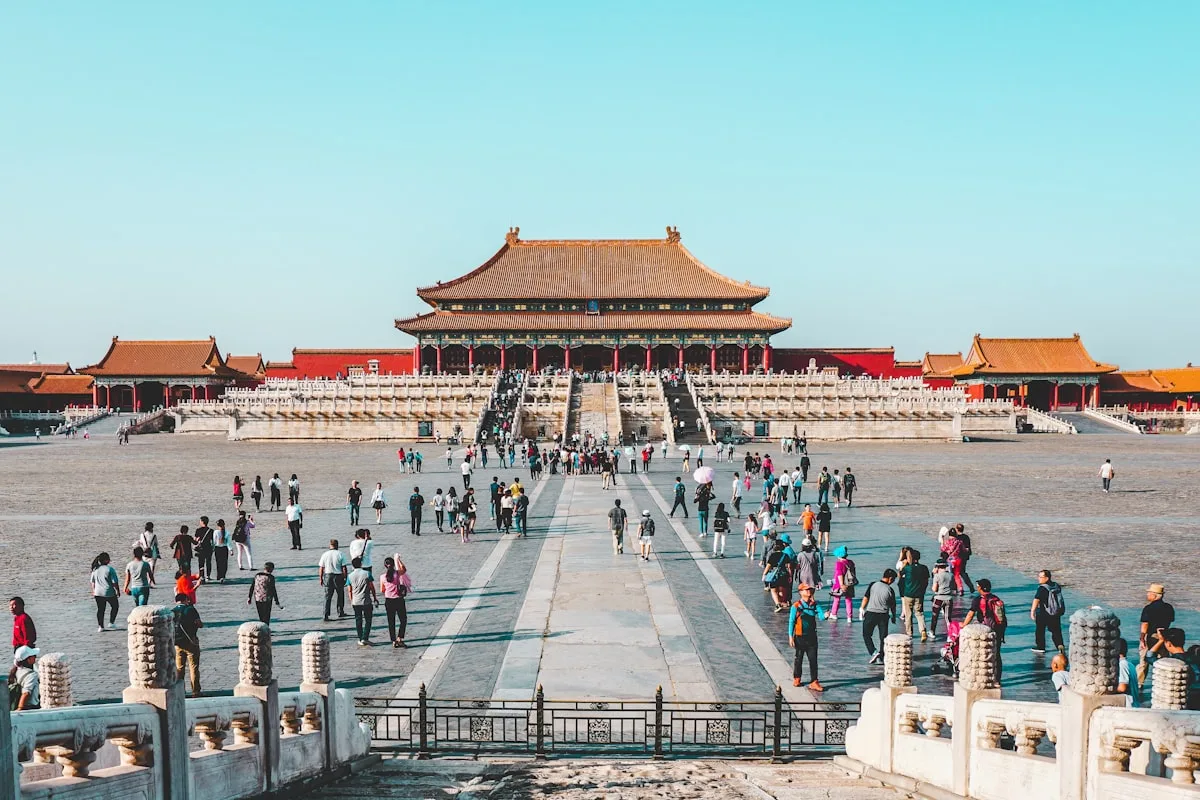
Most Beijing itineraries try to fit in everything. They read like a checklist designed by someone who has never actually walked from the Forbidden City’s south gate to its north gate with jet lag and a heat index of 40°C.
This one does not. Four days gives you the three things every first-timer should see: the Forbidden City, the Great Wall, and the hutongs, plus enough slack to sit down, eat properly, and not hate yourself by day three.
Day 1: The Center of Everything
Start your first morning at Jingshan Park (¥2, gates open 6:00 AM). Walk straight up the hill to the Wanchun Pavilion; the view from the top is the single best orientation to Beijing you can get. The Forbidden City spreads out below you in gold and red, the Drum and Bell Towers rise to the north, and on a clear day the Western Hills frame the whole thing. Five minutes up, ten minutes standing there, and you understand the layout of the city better than any map.
Walk down the north side of the hill and cross the street to the Forbidden City north gate. Most people enter through the south gate (Meridian Gate), but entering from the north lets you walk against the flow: fewer tour groups, less shouting, more space to breathe. The walk from the north gate to the south gate takes about two hours at a relaxed pace. You will see the Imperial Garden, the three main halls, and the courtyards that every guidebook covers. What the guidebooks do not tell you: the side halls are often empty, the paving stones are uneven (wear good shoes), and there is a café in the northeast corner with air conditioning and ¥40 lattes. Use it.
By early afternoon you will exit through the Meridian Gate into Tiananmen Square. Walk across it once. Take a photo. Then leave. The square is vast and ceremonial and profoundly boring after exactly seven minutes. Cross Chang’an Avenue east and walk ten minutes into the eastern extension of the Nanluoguxiang hutong area: the smaller streets that branch off the main lane are quieter, less commercial, and still have people living in them. Follow hutong navigation tips in our Beijing first-timer guide.
For dinner, roast duck. Dadong and Sijimin Fu are the names every list gives you. Both are good. Both need reservations 2-3 days ahead. If you forgot, try Bianyifang, which claims to have invented the dish 600 years ago and does not require a booking at 5:30 PM. It is not the best duck in Beijing, but it is in the top ten, and you will not wait two hours for it. For more duck options and neighborhood picks, see our Beijing food guide.
Total walking: 18,000-22,000 steps. Your feet will notice. Break in your shoes before you fly.
Day 2: The Wall
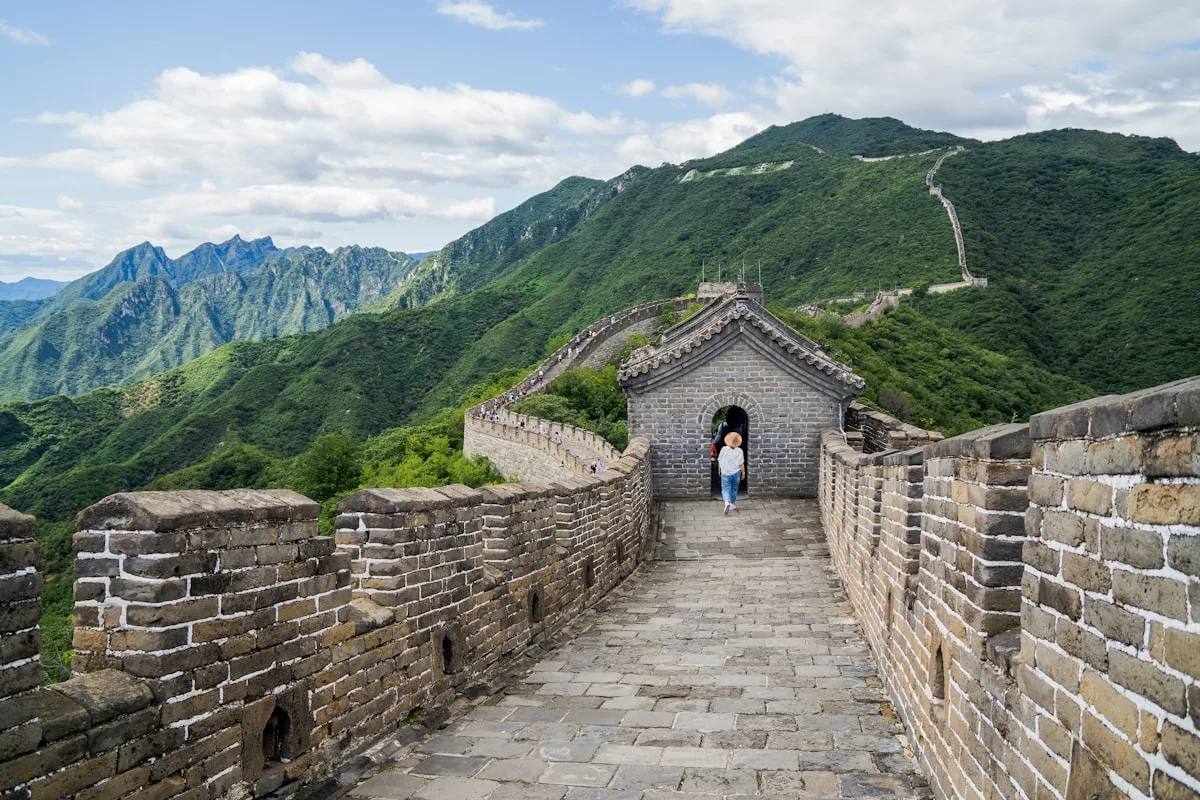
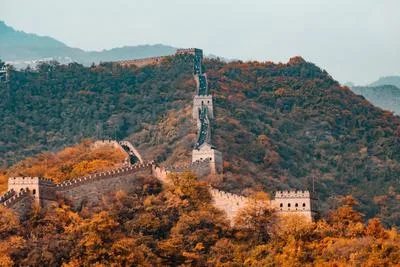
Take the earliest train you can manage. The Mutianyu section is 75 km north of the city (about 90 minutes by car). It has 23 watchtowers, a toboggan ride back down, and a third as many visitors as Badaling on a weekday. If you want the details on every section (Badaling, Mutianyu, Jinshanling, Simatai), read our Great Wall section guide.
Three ways to get there:
- Didi (~¥350 one way). Fastest. Set the destination to “Mutianyu Great Wall Ticket Office.” The driver will not speak English. Show the Chinese: 慕田峪长城.
- Mubus (¥80 return). A tourist shuttle that leaves from Dongzhimen at 8:00 AM and returns at 3:00 PM. Clean buses, English-speaking staff, no shopping stops. Book on their website the night before.
- Public bus: 916 Express to Huairou, then a local minibus. ¥20 total. Takes 2.5 hours. Only do this if you enjoy adventure and ambiguity.
At the site, take the cable car up and walk west toward watchtower 20. The wall climbs steeply at the far end: watchtower 20 to 23 is essentially a staircase at 50 degrees. You will see people turning back halfway. Let them. The view from the top of the restored section, looking west toward the wild, unrestored wall fading into the mountains, is why you came.
Pack a lunch. The restaurants at the base are overpriced and aggressively average. Pack water (two bottles minimum in summer). The wall has no shade and the stone radiates heat.
When you get back to the city around 4:00 PM, do nothing. Your legs will not want more. Eat somewhere close to your hotel. Tomorrow is another full day.
Day 3: Temples, Gardens, and the Beijing Nobody Photographs
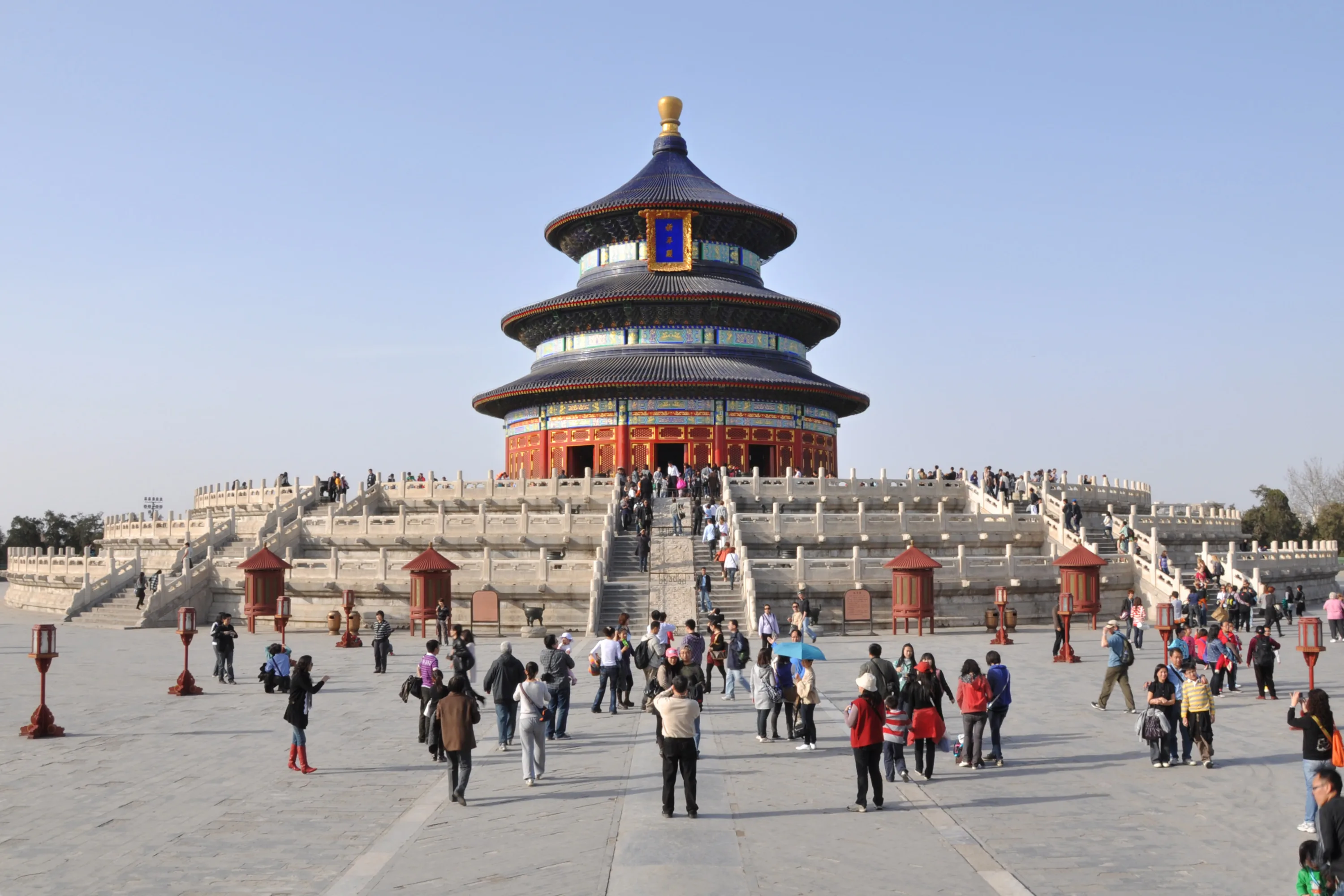
Start the morning at the Temple of Heaven (¥15, opens 6:00 AM). Arrive early, not for the temple itself, which you have seen versions of by now, but for the surrounding park. By 7:00 AM the covered walkways are full of retired Beijingers singing opera, playing Chinese chess, practicing calligraphy on the pavement with water brushes, and doing tai chi in groups of twenty. This is the Beijing most tourists never slow down enough to see. The park is the point. The temple is secondary.
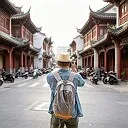
From the west gate, walk 15 minutes to the Qianmen Dashilan hutong district: narrower, older, more lived-in than Nanluoguxiang. The side streets here still have barber shops with vinyl chairs from the 1980s and noodle shops where a bowl costs ¥15 and the owner has been making the same three dishes since before you were born. Walk without a destination. Get lost on purpose.
Late morning: head to the Lama Temple (¥25), Beijing’s most active Tibetan Buddhist monastery. The main hall contains an 18-meter standing Buddha carved from a single piece of white sandalwood; it is in the Guinness Book of Records and it is genuinely staggering. The incense is thick enough to make your eyes water. Light three sticks at the entrance (free) and do the clockwise circuit. Even if you have no religious investment, the atmosphere is a sharp reset from the pace of the city outside.
Mid-afternoon: one of two paths depending on energy and interest:
Option A: Art and industry. The 798 Art District is a former East German-designed electronics factory complex converted into galleries, studios, and the best coffee in Beijing. You can spend three hours here without seeing a single thing you expected. Even if you dislike contemporary art, the factory architecture (Bauhaus lines, exposed brick, massive sawtooth skylights) is worth the Didi ride. The area is large; pick three galleries from a current map (the scene changes monthly) rather than trying to cover everything.
Option B — Lakes and quiet: the Houhai and Beihai lakes. Beihai Park (¥10) has a white Tibetan-style stupa on an island, willows touching the water, and rental boats shaped like ducks. It has been a park since 1925 and a royal garden since the 11th century. The northern shore of Houhai has bars that are loud and skippable; the eastern shore, along the old hutong walls, is quiet and lovely at sunset.
For dinner: Sichuan, Hunan, or Xinjiang food. You have had duck. Beijing is a city of 22 million people from everywhere. The Sichuan restaurant with a queue out the door is where you should eat. Our Beijing food guide has specific picks by neighborhood.
Day 4: Loose Ends and the Summer Palace
Your last day is flexible. If your flight is late afternoon or evening, spend the morning at the Summer Palace (¥30, opens 6:30 AM). It is 40 minutes northwest of central Beijing. The Long Corridor, a covered walkway with 14,000 painted scenes, runs along the northern shore of Kunming Lake. Walk it. Then climb Longevity Hill to the Tower of Buddhist Incense for a view that competes with Jingshan’s. The marble boat at the western end of the lake is a permanent monument to terrible fiscal decisions — the Empress Dowager Cixi diverted money meant for the navy to build it. It does not float.
If the Summer Palace feels too ambitious for a departure day, skip it and do the Confucius Temple and Guozijian (the old Imperial Academy) instead. They share a complex, they are five minutes from the Lama Temple, and they are almost always empty. The stone tablets with 1,900-year-old Confucian classics carved onto them are more interesting than they sound.
Getting to the airport: Beijing Capital (PEK) is 45-60 minutes from the city center by Didi (¥120-180). Daxing (PKX) is farther; budget 75-90 minutes and ¥200-260. Allow an extra 30 minutes for airport security, which is thorough and unsmiling.
Where to Stay
Book through Trip.com, filtering for properties that accept foreign passports.
Beijing’s layout is a set of concentric rings. As a first-timer, stay inside or just outside the Second Ring Road. The three neighborhoods that work best:
- Wangfujing / Dongcheng: walking distance to Forbidden City and hutongs. Most convenient. Most expensive.
- Dongzhimen / Dongsi: subway hub, close to the airport express, good food streets, less touristy than Wangfujing.
- Xidan / Xicheng: cheaper, west side of the Forbidden City, closer to the Summer Palace direction.
Our Beijing accommodation guide has specific hotels and the “Foreign Guests Accepted” filter explained — read it before you book. Not every hotel in Beijing can legally check in an international passport.
When to Go
The four best months for Beijing: April, May, September, October. Temperatures are comfortable, skies are clearer, and the tourist crowds have not peaked. Avoid Golden Week (October 1-7) and Chinese New Year (late January or February) — the city is either packed or half-closed. July and August are hot (30-35°C, humid) but manageable if you start early and take a midday break. December to February is cold (Beijing averages -5°C) but the sites are empty and the winter light on the Forbidden City roof tiles is spectacular.
For month-by-month weather, festival dates, and what to pack by season, see our holiday calendar survival guide.
Planning a longer trip? Our multi-week route planner shows how to combine Beijing with Xi’an, Shanghai, and Chengdu in 2-4 weeks.
Published July 2026. Prices are approximate and reflect mid-2026 levels.